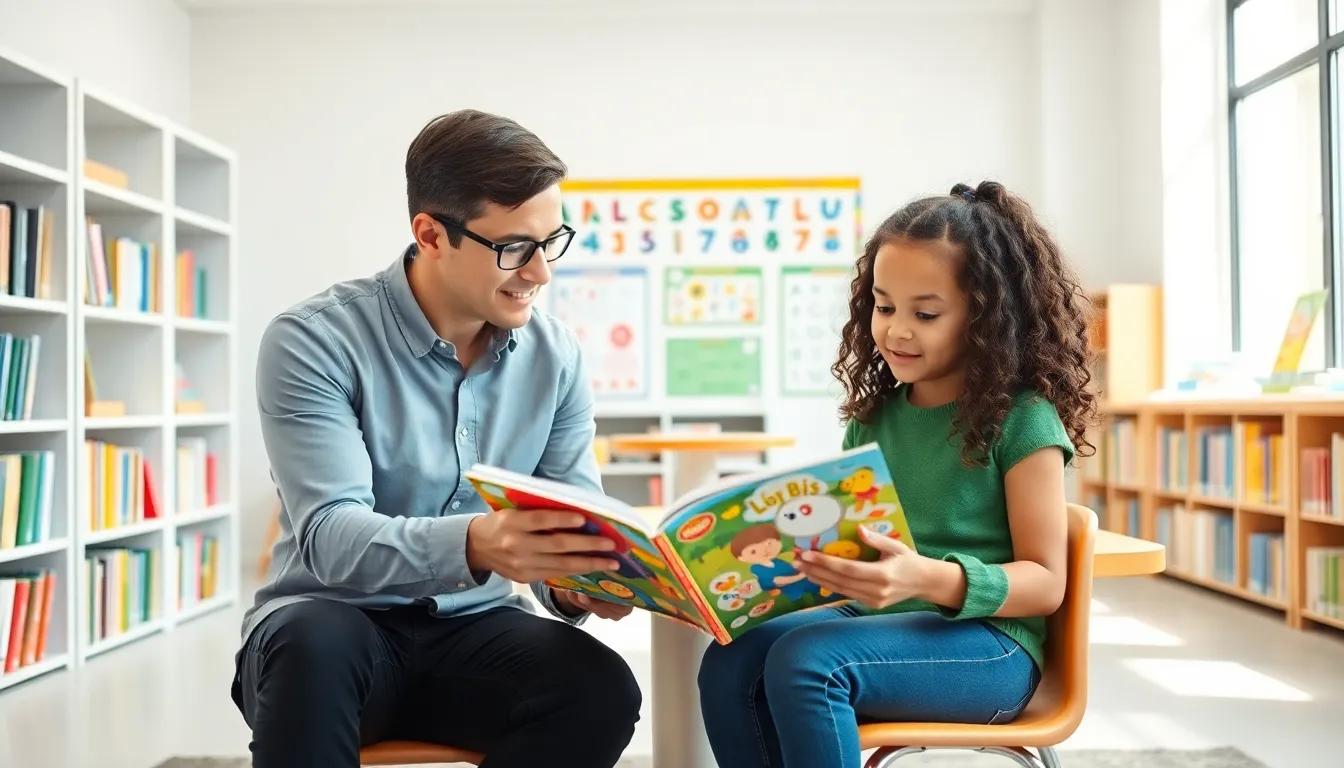
The best reading & literacy development strategies shape how children learn, communicate, and think. Strong reading skills open doors to academic success and lifelong learning. Yet many parents and educators wonder which methods actually work. This guide covers proven approaches to building reading proficiency. It explores why early literacy matters, which teaching strategies deliver results, and how to support readers who struggle. Whether working with preschoolers or older students, these best reading & literacy development practices provide a clear path forward.
Table of Contents
ToggleKey Takeaways
- Children who read proficiently by third grade are four times more likely to graduate high school on time, making early literacy intervention crucial.
- The best reading & literacy development strategies combine systematic phonics instruction with vocabulary building and comprehension techniques.
- Creating a literacy-rich environment with 20-30 accessible books, reading role models, and daily conversations significantly boosts reading skills.
- Phonemic awareness—the ability to hear and manipulate individual sounds—is one of the strongest predictors of reading success.
- About 20% of students struggle with reading, but early identification and targeted, evidence-based intervention can help most become competent readers.
- Daily reading practice of just 15 minutes, combined with explicit strategy instruction, accelerates literacy growth for all learners.
Why Early Literacy Skills Matter
Children who develop reading skills early gain advantages that last throughout their education. Research from the National Institute of Child Health shows that kids who read well by third grade are four times more likely to graduate high school on time. That’s a striking number.
Early literacy builds the foundation for all other learning. Math word problems, science textbooks, history essays, they all require strong reading ability. A child who struggles to decode words spends so much mental energy on basic reading that comprehension suffers.
The brain develops rapidly between ages zero and five. During this window, exposure to language shapes neural pathways. Children who hear more words, see more books, and engage in more conversations develop stronger literacy foundations. This doesn’t mean drilling toddlers with flashcards. It means reading aloud, talking about pictures, and making books part of daily life.
Best reading & literacy development happens when skills build on each other. A child first learns that letters represent sounds. Then they blend those sounds into words. Eventually, they recognize whole words automatically. Each stage depends on the one before it.
Delayed literacy skills often create a “Matthew effect”, named after a biblical passage about the rich getting richer. Good readers read more, which makes them better readers. Struggling readers avoid books, which widens the gap. Early intervention breaks this cycle before it starts.
Effective Strategies for Building Reading Proficiency
Building strong readers requires deliberate practice with proven methods. Two areas deserve particular attention: phonics instruction and vocabulary development.
Phonics and Phonemic Awareness
Phonemic awareness refers to the ability to hear and manipulate individual sounds in words. Can a child tell you that “cat” starts with the /k/ sound? Can they blend /s/-/u/-/n/ into “sun”? These skills predict reading success better than almost any other factor.
Phonics connects those sounds to written letters. Systematic phonics instruction teaches letter-sound relationships in a logical sequence. Children learn short vowels before long vowels. They master simple consonant-vowel-consonant words before tackling blends and digraphs.
The best reading & literacy development programs don’t treat phonics as optional. The science of reading, decades of research on how the brain processes text, confirms that explicit phonics instruction helps most children learn to read. This is especially true for struggling readers.
Effective phonics practice looks like this: daily lessons of 15-20 minutes, plenty of decodable texts that match skills taught, and immediate correction when errors occur. Children need to apply phonics knowledge to real reading, not just worksheets.
Vocabulary and Comprehension Techniques
Decoding words means little if readers don’t understand them. Vocabulary knowledge strongly predicts reading comprehension. Children from language-rich homes may enter kindergarten knowing 20,000 words. Others know far fewer.
Building vocabulary requires repeated exposure in meaningful contexts. Simply providing definitions doesn’t stick. Instead, children need to encounter words multiple times across different situations. Reading aloud exposes kids to words they wouldn’t meet in everyday conversation.
Comprehension strategies give readers tools to understand what they read. These include:
- Predicting: Guessing what might happen next based on evidence
- Questioning: Asking questions before, during, and after reading
- Visualizing: Creating mental images of scenes and characters
- Summarizing: Identifying main ideas and key details
- Making connections: Linking text to personal experience or other books
The best reading & literacy development approach teaches these strategies explicitly. Teachers model their own thinking while reading. Students practice with guidance before working independently.
Creating a Literacy-Rich Environment
Environment matters. Children surrounded by books, print, and reading role models develop stronger literacy skills. This applies to homes and classrooms alike.
A literacy-rich environment starts with access. Kids need books they can reach, choose, and explore freely. Research suggests children should have at least 20-30 books in their home library. Public libraries offer free access for families who can’t build personal collections.
Physical space sends messages about priorities. A cozy reading corner with good lighting invites children to curl up with books. Labels on household items (“door,” “sink,” “toys”) connect print to meaning. Alphabet charts and word walls make literacy visible.
But materials alone don’t create readers. Adults must model reading behavior. Children who see parents reading for pleasure understand that books offer enjoyment, not just work. Shared reading time, where adults and children read together, builds positive associations with literacy.
Best reading & literacy development environments also include writing opportunities. Drawing, scribbling, and eventually writing connect to reading development. When children write, they think about letters, sounds, and meaning from a producer’s perspective.
Conversation matters too. Families who discuss books, ask open-ended questions, and encourage storytelling support literacy growth. “What do you think will happen?” “Why did the character feel sad?” These questions build the thinking skills that strong readers use.
Supporting Struggling Readers
Some children need extra help even though good instruction. Reading difficulties affect roughly 20% of students. Early identification and targeted support make a significant difference.
Warning signs appear early. Preschoolers who struggle with rhyming, can’t recognize letters, or show little interest in books may need closer attention. Kindergarteners who can’t blend simple sounds or first graders who guess at words based on pictures deserve assessment.
Effective intervention shares key features. It happens early, ideally before third grade. It provides intensive, one-on-one or small-group instruction. It focuses on specific skill gaps identified through assessment. And it uses systematic, explicit teaching methods.
Best reading & literacy development support doesn’t mean doing more of what isn’t working. If a child hasn’t responded to classroom phonics instruction, they need different approaches, perhaps more repetition, multisensory techniques, or breaking skills into smaller steps.
Parents and teachers should communicate regularly about progress. Home practice reinforces school instruction. Even 15 minutes of daily reading practice accelerates growth.
Some struggling readers have dyslexia or other learning differences. These children aren’t less intelligent, their brains simply process written language differently. With appropriate instruction, most can become competent readers. The key is identifying needs early and providing evidence-based intervention.
Patience matters. Reading development isn’t linear. Some children make sudden leaps after periods of apparent stagnation. Consistent support and encouragement help struggling readers persist through difficulty.