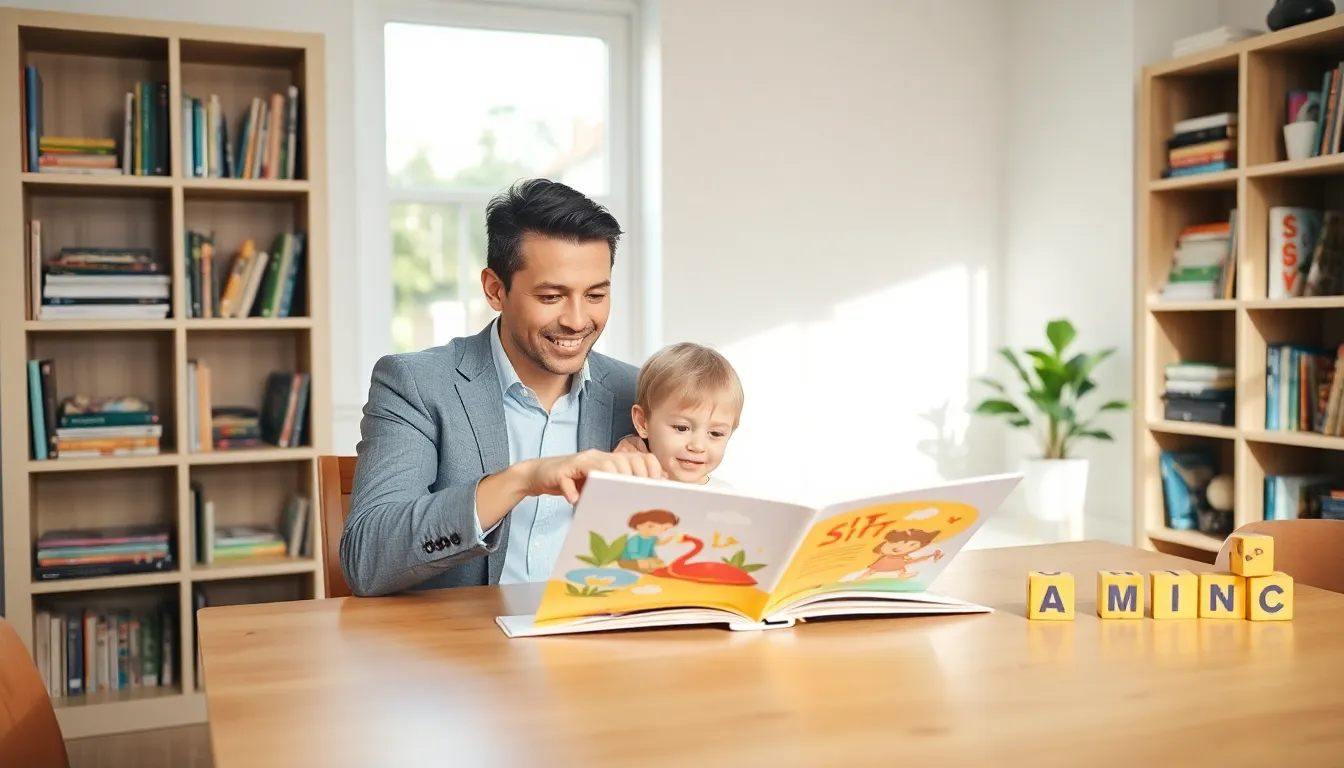
A reading and literacy development guide helps parents, educators, and caregivers support children through every stage of learning to read. Strong literacy skills open doors to academic success, career opportunities, and personal growth. Yet many adults feel unsure about how to best support a child’s reading journey.
This guide breaks down the stages of literacy development, identifies key skills that build reading fluency, and offers practical strategies anyone can use at home. It also addresses common reading challenges and how to overcome them. Whether a child is just learning letter sounds or struggling with comprehension, these evidence-based approaches make a real difference.
Table of Contents
ToggleKey Takeaways
- A reading and literacy development guide helps parents and educators support children through five key stages, from pre-reading (birth to age 5) through fluent reading (age 9 and up).
- Building reading fluency requires balanced attention to phonemic awareness, phonics, vocabulary, comprehension, and fluency—not just one skill in isolation.
- Reading aloud daily is one of the most powerful strategies for supporting literacy development at any age.
- Create a print-rich environment and follow children’s interests to boost motivation and make reading a natural part of daily life.
- Common reading challenges like slow decoding, poor comprehension, or lack of motivation can be addressed with targeted strategies such as repeated readings, vocabulary building, and varied reading materials.
- Persistent difficulties with phonemic awareness and decoding may indicate dyslexia, which affects 15-20% of the population and benefits from early identification and specialized instruction.
Understanding the Stages of Literacy Development
Literacy development follows a predictable pattern, though every child progresses at their own pace. Understanding these stages helps adults provide the right support at the right time.
Pre-Reading Stage (Birth to Age 5)
Children in this stage develop foundational skills before formal reading begins. They learn that print carries meaning, recognize familiar logos and signs, and begin to understand that books are read from left to right. Exposure to books, songs, and conversations builds vocabulary and phonological awareness.
Emergent Reading Stage (Ages 4-6)
During this phase, children start connecting letters to sounds. They recognize some sight words and can “read” familiar books from memory. This stage marks the beginning of decoding, the ability to sound out simple words.
Early Reading Stage (Ages 6-7)
Readers at this level decode simple texts with increasing accuracy. They expand their sight word vocabulary and begin reading short sentences independently. Comprehension skills start developing as children connect what they read to their own experiences.
Transitional Reading Stage (Ages 7-9)
Children become more fluent readers during this stage. They tackle longer texts, recognize word patterns, and read with better expression. Silent reading becomes more common, and comprehension deepens.
Fluent Reading Stage (Ages 9 and Up)
Fluent readers process text automatically. They adjust reading speed based on purpose and difficulty. Critical thinking skills emerge as readers analyze, evaluate, and synthesize information from multiple sources.
A reading and literacy development guide recognizes that these stages overlap. Some children move quickly through certain phases while spending more time in others. The key is meeting each child where they are.
Essential Skills for Building Reading Fluency
Reading fluency requires several interconnected skills working together. Each skill builds on the others, creating a strong foundation for comprehension.
Phonemic Awareness
This skill involves hearing and manipulating individual sounds in words. Children who can identify that “cat” has three sounds (/c/ /a/ /t/) are better prepared for reading. Activities like rhyming games and sound blending exercises strengthen phonemic awareness.
Phonics
Phonics connects sounds to written letters and letter combinations. Systematic phonics instruction teaches children predictable patterns in English spelling. Research consistently shows that explicit phonics teaching improves reading outcomes, especially for struggling readers.
Vocabulary
A rich vocabulary directly impacts reading comprehension. Children need to know what words mean to understand what they read. Conversations, read-alouds, and wide reading exposure all build vocabulary.
Comprehension
Comprehension turns decoding into meaning. Strong readers ask questions, make predictions, visualize scenes, and connect new information to prior knowledge. Teaching these strategies explicitly helps children become active, engaged readers.
Reading Fluency
Fluency combines accuracy, speed, and expression. Fluent readers don’t stumble over words, they read smoothly, which frees up mental energy for understanding. Repeated reading of the same text and listening to fluent models both improve fluency.
Any reading and literacy development guide worth its salt emphasizes that these skills need balanced attention. Focusing only on phonics without comprehension instruction, for example, produces children who can decode but not understand.
Effective Strategies to Support Literacy at Home
Parents and caregivers play a critical role in literacy development. These practical strategies create a literacy-rich environment without requiring special training or expensive materials.
Read Aloud Daily
Reading aloud remains one of the most powerful literacy activities. It exposes children to new vocabulary, sentence structures, and ideas beyond their independent reading level. Even older children benefit from hearing books read aloud.
Create a Print-Rich Environment
Books, magazines, labels, and lists make print a natural part of daily life. When children see adults reading and writing for real purposes, they understand that literacy matters.
Talk About Books
Conversations about stories build comprehension skills. Ask open-ended questions: “What do you think will happen next?” or “Why did the character make that choice?” These discussions teach children to think critically about texts.
Follow the Child’s Interests
A child who loves dinosaurs will read dinosaur books with enthusiasm. Interest drives motivation, and motivation drives practice. Let children choose some of their own reading material, even if it seems too easy or unusual.
Make Writing Part of Life
Writing reinforces reading skills. Encourage children to write shopping lists, thank-you notes, stories, or journal entries. The act of putting thoughts into words strengthens the reading-writing connection.
Be Patient With Mistakes
Correction has its place, but too much criticism discourages young readers. When a child stumbles, give them time to self-correct. Celebrate effort and progress, not just perfection.
A reading and literacy development guide should remind adults that consistency matters more than intensity. Fifteen minutes of daily reading beats an hour-long session once a week.
Overcoming Common Reading Challenges
Many children encounter obstacles on their reading journey. Identifying challenges early and responding with targeted support makes a significant difference.
Difficulty With Decoding
Some children struggle to connect sounds to letters. They may guess at words based on pictures or first letters. Systematic phonics instruction, often with multisensory approaches that involve seeing, hearing, and touching, helps these learners. Programs that use hands-on letter tiles or sand tracing can be especially effective.
Slow Reading Speed
Readers who decode accurately but slowly may need more fluency practice. Repeated readings of familiar texts build automaticity. Partner reading, where a child reads alongside a fluent reader, also improves speed.
Poor Comprehension
Some children read words accurately but don’t understand what they’ve read. This challenge often stems from limited vocabulary or weak background knowledge. Building knowledge through discussions, videos, and experiences improves comprehension. Teaching specific strategies, like summarizing paragraphs or creating mental images, also helps.
Lack of Motivation
Reluctant readers often haven’t found books that interest them. Graphic novels, audiobooks, magazines, and digital texts can spark engagement. Removing pressure and making reading a pleasurable activity often reignites interest.
Signs of Dyslexia
Persistent difficulty with phonemic awareness, decoding, and spelling even though good instruction may indicate dyslexia. This learning difference affects roughly 15-20% of the population. Early identification and specialized instruction, such as Orton-Gillingham-based approaches, help dyslexic readers succeed.
A reading and literacy development guide must acknowledge that some challenges require professional support. Teachers, reading specialists, and educational psychologists can provide assessments and interventions beyond what families can offer alone.