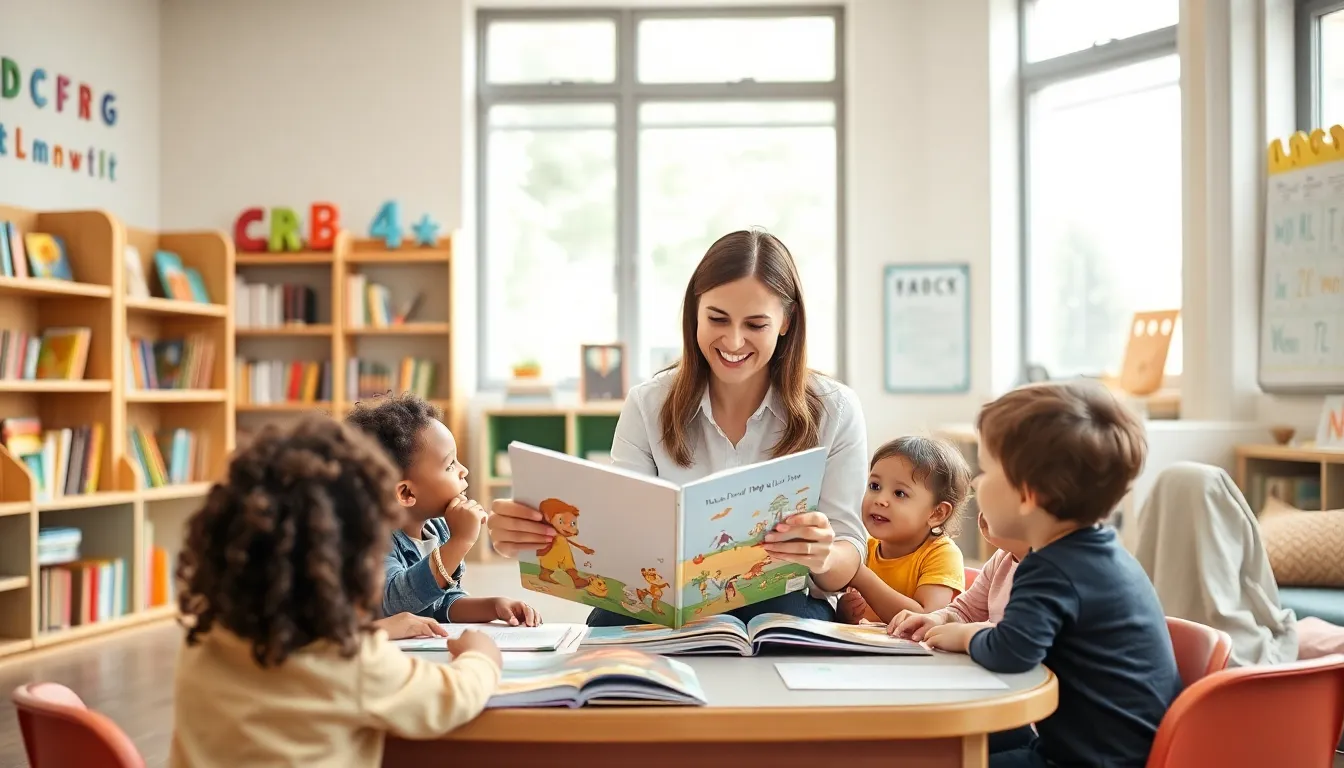
Reading and literacy development techniques shape how children learn to understand and use language. These skills form the basis of academic success and lifelong learning. Strong readers become confident learners who can access information, think critically, and communicate effectively.
Research shows that early literacy instruction has lasting effects on a child’s educational journey. Children who develop solid reading skills by third grade are four times more likely to graduate high school on time. This makes literacy development one of the most important investments educators and parents can make.
This guide covers proven reading and literacy development techniques that work across age groups. From phonemic awareness to vocabulary building, each strategy builds on the last to create capable, enthusiastic readers.
Table of Contents
ToggleKey Takeaways
- Children who develop strong reading skills by third grade are four times more likely to graduate high school on time, making early literacy development essential.
- Effective reading and literacy development techniques combine phonemic awareness with systematic phonics instruction for the best decoding results.
- Vocabulary growth requires 10-12 meaningful exposures to new words before they become part of a child’s working vocabulary.
- Comprehension strategies like predicting, questioning, visualizing, and summarizing should be modeled explicitly through teacher think-alouds.
- Adapting literacy techniques to each developmental stage—from early childhood through middle school—keeps students engaged and motivated.
- A supportive reading environment at home and school, including daily read-alouds and accessible book collections, reinforces literacy’s value and accelerates growth.
Understanding the Stages of Literacy Development
Literacy development follows a predictable pattern, though children move through stages at different speeds. Understanding these stages helps educators and parents provide the right support at the right time.
Pre-emergent Stage (Birth to Age 5)
Children begin developing literacy skills long before they read their first word. They learn that print carries meaning, that books are read from left to right, and that spoken words connect to written symbols. Reading aloud to children during this stage builds essential foundations.
Emergent Stage (Ages 4-6)
Children start recognizing letters and connecting them to sounds. They begin “pretend reading” by memorizing favorite books and telling stories from pictures. This stage marks the beginning of formal reading and literacy development techniques in most educational settings.
Early Reading Stage (Ages 6-7)
Children decode simple words and read basic texts. They rely heavily on phonics skills and often read word-by-word. Fluency develops gradually as they encounter familiar words repeatedly.
Transitional Stage (Ages 7-9)
Readers gain fluency and begin reading silently. They recognize more words automatically and spend less mental energy on decoding. Comprehension becomes more important as texts grow complex.
Fluent Stage (Ages 9+)
Readers handle varied texts with confidence. They adjust their reading speed based on purpose and material difficulty. Critical thinking and analysis become central to the reading experience.
Phonemic Awareness and Phonics Instruction
Phonemic awareness and phonics form the backbone of reading and literacy development techniques. These skills help children crack the code of written language.
Phonemic Awareness Activities
Phonemic awareness involves hearing and manipulating individual sounds in words. It’s an auditory skill that doesn’t require printed text.
Effective activities include:
- Sound isolation: Asking “What’s the first sound in ‘cat’?”
- Blending: Combining /c/ /a/ /t/ to say “cat”
- Segmenting: Breaking “dog” into /d/ /o/ /g/
- Rhyming games: Identifying words that share ending sounds
Children with strong phonemic awareness learn to read faster and more accurately. Research indicates that explicit phonemic awareness instruction improves reading outcomes for 80% of struggling readers.
Systematic Phonics Instruction
Phonics connects sounds to written letters and letter patterns. Systematic phonics instruction teaches these relationships in a logical sequence, moving from simple to complex.
A strong phonics program covers:
- Single consonant sounds
- Short vowel sounds
- Consonant blends (bl, str, cr)
- Long vowel patterns
- Vowel teams (ea, oa, ai)
- R-controlled vowels
Reading and literacy development techniques that combine phonemic awareness with systematic phonics produce the best results. Children need both skills working together to decode unfamiliar words.
Building Vocabulary and Comprehension Skills
Decoding words means little if readers don’t understand them. Vocabulary and comprehension instruction turn word-callers into true readers.
Vocabulary Development Strategies
Children learn most vocabulary through exposure, hearing words in conversation and encountering them in books. But, direct vocabulary instruction accelerates growth, especially for academic and content-specific terms.
Proven vocabulary techniques include:
- Context clues: Teaching students to use surrounding text to infer meaning
- Word parts: Breaking words into prefixes, roots, and suffixes
- Semantic mapping: Creating visual connections between related words
- Multiple exposures: Encountering new words in varied contexts
Research suggests children need 10-12 meaningful encounters with a word before it becomes part of their working vocabulary.
Comprehension Instruction
Comprehension is the ultimate goal of reading and literacy development techniques. Strong readers actively construct meaning from text.
Key comprehension strategies to teach:
- Predicting: Making educated guesses about what comes next
- Questioning: Asking questions before, during, and after reading
- Visualizing: Creating mental images from text descriptions
- Summarizing: Identifying main ideas and key details
- Making connections: Linking text to personal experience, other texts, and world knowledge
These strategies work best when teachers model them explicitly. Think-alouds, where instructors verbalize their thinking process while reading, help students see how skilled readers approach text.
Effective Strategies for Different Age Groups
Reading and literacy development techniques must match the learner’s developmental stage. What works for a kindergartner won’t engage a middle schooler.
Early Childhood (Ages 3-5)
- Read aloud daily with expression and enthusiasm
- Point to words while reading to build print awareness
- Sing songs and recite nursery rhymes
- Play with magnetic letters and alphabet puzzles
- Encourage scribbling and early writing attempts
Elementary School (Ages 6-10)
- Provide independent reading time with self-selected books
- Use guided reading groups matched to skill levels
- Teach spelling patterns alongside reading instruction
- Introduce graphic organizers for comprehension
- Build fluency through repeated readings and reader’s theater
Middle School and Beyond (Ages 11+)
- Focus on reading across content areas
- Teach annotation and active reading strategies
- Discuss author’s purpose and text structure
- Introduce literary analysis concepts
- Encourage wide reading of varied genres
Adapting reading and literacy development techniques to each age group keeps instruction relevant and engaging. Students stay motivated when challenges match their abilities.
Creating a Supportive Reading Environment
The physical and emotional environment shapes reading success. Children thrive when literacy feels natural and valued.
Physical Environment
A print-rich space signals that reading matters. Classrooms and homes should include:
- Accessible book collections at eye level
- Comfortable reading spots with good lighting
- Labels and environmental print throughout the space
- Writing materials readily available
- Displays of student writing and reading responses
Emotional Environment
Children take risks when they feel safe. Building a positive reading culture means:
- Celebrating reading progress without comparison to peers
- Allowing book choice and honoring preferences
- Reading aloud with joy and enthusiasm
- Discussing books in conversations, not just assignments
- Modeling adult reading habits
Home-School Connection
Effective reading and literacy development techniques extend beyond the classroom. Parents support literacy by:
- Reading together for 20 minutes daily
- Visiting libraries and bookstores regularly
- Limiting screen time to make room for reading
- Asking open-ended questions about books
- Keeping books visible and accessible at home
When home and school environments align, children receive consistent messages about literacy’s value. This consistency accelerates growth and builds lasting reading habits.