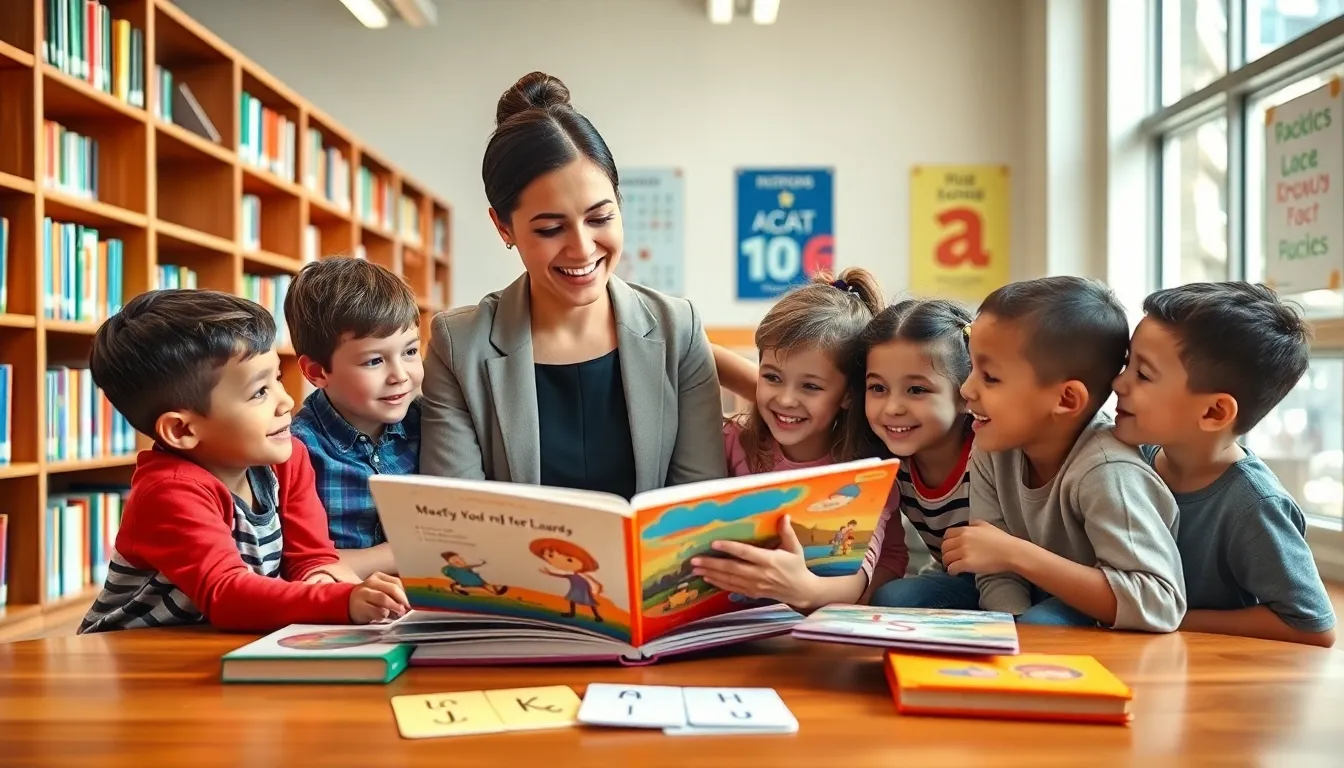
Reading and literacy development forms the foundation of all learning. Children who read well perform better in school, think more critically, and communicate with greater confidence. Adults with strong literacy skills earn higher incomes and participate more actively in their communities.
Yet literacy doesn’t happen by accident. It develops through specific stages, responds to key influences, and benefits from intentional support. This article breaks down the stages of literacy development, explores what shapes reading ability, and offers practical strategies that parents and educators can use today.
Table of Contents
ToggleKey Takeaways
- Reading and literacy development progresses through four key stages—from pre-reading skills in infancy to advanced comprehension in adolescence and beyond.
- Phonemic awareness, vocabulary size, background knowledge, and motivation are the primary factors influencing a child’s reading ability.
- Daily read-alouds and explicit phonics instruction are among the most effective strategies to accelerate literacy growth.
- Children who enjoy reading enter a positive cycle: more practice leads to better skills, which increases enjoyment and further progress.
- Parents model reading behavior and provide early exposure, while educators deliver systematic, research-based instruction to address skill gaps.
- Partnership between home and school produces the strongest outcomes for long-term reading and literacy development.
The Stages of Literacy Development
Literacy development follows a predictable path, though children move through it at different speeds. Understanding these stages helps adults provide the right support at the right time.
Pre-Reading Stage (Birth to Age 5)
Before children read a single word, they build essential pre-reading skills. They learn that books have a front and back. They discover that print moves left to right. They begin connecting sounds to letters.
During this stage, children benefit from hearing stories read aloud. They start recognizing familiar logos and signs. Rhyming games and alphabet songs build phonemic awareness, the ability to hear and manipulate individual sounds in words.
Emergent Reading Stage (Ages 5-7)
Children in this stage begin decoding simple words. They sound out letters and blend them together. They recognize common sight words like “the,” “and,” and “is.”
Reading and literacy development accelerates when children practice daily. Short, predictable books with repetitive phrases work well here. Children gain confidence as they successfully read entire sentences.
Fluent Reading Stage (Ages 7-9)
Fluency means reading smoothly, accurately, and with expression. Children no longer struggle with each word. They read in phrases rather than word-by-word.
At this stage, comprehension becomes the primary focus. Children answer questions about what they read. They make predictions and connections. Reading and literacy development now includes understanding story structure, character motivation, and main ideas.
Reading to Learn Stage (Ages 9 and Up)
Older children use reading as a tool for learning. They read textbooks, articles, and novels. They adjust their reading speed based on difficulty. They take notes and summarize key points.
Reading and literacy development continues through adolescence and adulthood. Advanced readers analyze arguments, evaluate sources, and synthesize information from multiple texts.
Key Factors That Influence Reading Ability
Some children learn to read easily. Others struggle. Several factors explain these differences.
Phonemic Awareness
Children who hear individual sounds in words learn to read faster. A child who can break “cat” into /c/ /a/ /t/ has an advantage. This skill can be taught through rhyming games, clapping syllables, and sound isolation activities.
Vocabulary Size
Children with larger vocabularies comprehend text more easily. They already know the words they encounter. Reading and literacy development depends heavily on the number of words children hear during their first five years.
Research shows that children from language-rich homes hear 30 million more words by age three than children from less verbal environments. This gap affects reading outcomes for years.
Background Knowledge
Readers understand text better when they already know something about the topic. A child who has visited a farm will comprehend a story about farm animals more easily. Building background knowledge through experiences, conversations, and read-alouds supports reading and literacy development.
Motivation and Engagement
Children who enjoy reading practice more. Practice improves skill. Improved skill increases enjoyment. This positive cycle drives progress.
Conversely, children who find reading frustrating avoid it. They fall further behind their peers. Keeping reading enjoyable, especially during early stages, matters enormously for long-term success.
Effective Strategies to Support Literacy Growth
Strong reading and literacy development requires intentional practice. These strategies work across ages and skill levels.
Read Aloud Daily
Reading aloud exposes children to vocabulary, sentence structures, and story patterns they wouldn’t encounter in everyday speech. It builds listening comprehension before reading comprehension develops. Even older children benefit from hearing fluent reading modeled.
Teach Phonics Explicitly
Systematic phonics instruction works. Children need to learn letter-sound relationships in a logical sequence. They need practice blending sounds into words and segmenting words into sounds. Research consistently shows that explicit phonics instruction accelerates reading and literacy development.
Encourage Wide Reading
Volume matters. Children who read more become better readers. Provide access to books at appropriate levels. Let children choose some of their reading material. Comic books, magazines, and graphic novels count too.
Build Vocabulary Through Conversation
Talk with children about interesting topics. Use varied vocabulary. Explain new words in context. Ask open-ended questions that require more than yes-or-no answers.
Create a Print-Rich Environment
Surround children with words. Label items around the house. Post schedules and lists. Keep books, magazines, and newspapers visible and accessible. Children learn that print carries meaning when they see it used purposefully.
The Role of Parents and Educators
Parents and educators share responsibility for reading and literacy development. Their efforts complement each other.
What Parents Can Do
Parents serve as a child’s first teachers. They can read bedtime stories from infancy. They can point out words on signs and packages. They can talk about books after reading them together.
Parents also model reading behavior. Children who see adults reading for pleasure understand that reading has value beyond schoolwork. A parent who reads the newspaper or a novel sends a powerful message.
Patience matters too. Children develop at different rates. Comparing one child to another creates anxiety. Celebrating small victories builds confidence.
What Educators Can Do
Teachers provide systematic instruction that most parents cannot. They assess reading levels accurately. They identify specific skill gaps. They apply research-based methods to address those gaps.
Effective reading instruction includes phonemic awareness activities, phonics lessons, fluency practice, vocabulary building, and comprehension strategy instruction. These five components form the foundation of evidence-based reading and literacy development programs.
Teachers also create communities of readers. They recommend books. They lead discussions. They show enthusiasm for literature. This social dimension of reading motivates students to engage with texts.
Partnership Between Home and School
The best outcomes occur when parents and educators work together. Teachers can suggest books for home reading. Parents can share observations about their child’s interests and struggles. Regular communication keeps everyone aligned.